
Australia
Stable, culturally diverse and
democratic society with a skilled workforce

raramuridesign support
Skilled Migration Assessment - Thanks
Thank you for submitting our General Skilled Migration Assessment Form.
Due to an unprecedented influx of enquires, it may take a few days for you to receive a response from a consultant, but rest assured we will contact you as soon as we possibly can.
We will contact you shortly regarding your prospects for obtaining permanent residency, and eventually citizenship, for Australia.
Privacy Policy
This Privacy Policy describes why we collect information, what information we collect, and what we do (and do not do) with it. It also explains how you can change it. Please read our privacy policy carefully to get a clear understanding of how we collect, use, protect or otherwise handle your Personally Identifiable Information in accordance with our website.
What personal information do we collect from the people that visit our blog, website or app?
When ordering or registering on our site, as appropriate, you may be asked to enter your name, email address, mailing address, phone number or other details to help you with your experience.
When do we collect information?
We collect information from you when you register on our site, place an order, subscribe to a newsletter, respond to a survey, fill out a form or enter information on our site.
How do we use your information?
We may use the information we collect from you when you register, make a purchase, sign up for our newsletter, respond to a survey or marketing communication, surf the website, or use certain other site features in the following ways:
- To personalize user's experience and to allow us to deliver the type of content and product offerings in which you are most interested.
- To improve our website in order to better serve you.
- To allow us to better service you in responding to your customer service requests.
- To administer a contest, promotion, survey or other site feature.
- To quickly process your transactions.
- To send periodic emails regarding your order or other products and services.
How do we protect visitor information?
Our website is scanned on a regular basis for security holes and known vulnerabilities in order to make your visit to our site as safe as possible.
We use regular Malware Scanning.
Your personal information is contained behind secured networks and is only accessible by a limited number of persons who have special access rights to such systems, and are required to keep the information confidential. In addition, all sensitive/credit information you supply is encrypted via Secure Socket Layer (SSL) technology.
We implement a variety of security measures when a user places an order enters, submits, or accesses their information to maintain the safety of your personal information.
All transactions are processed through a gateway provider and are not stored or processed on our servers.
Do we use 'cookies'?
Yes. Cookies are small files that a site or its service provider transfers to your computer's hard drive through your Web browser (if you allow) that enables the site's or service provider's systems to recognize your browser and capture and remember certain information. For instance, we use cookies to help us remember and process the items in your shopping cart. They are also used to help us understand your preferences based on previous or current site activity, which enables us to provide you with improved services. We also use cookies to help us compile aggregate data about site traffic and site interaction so that we can offer better site experiences and tools in the future.
We use cookies to:
- Help remember and process the items in the shopping cart.
- Understand and save user's preferences for future visits.
- Compile aggregate data about site traffic and site interactions in order to offer better site experiences and tools in the future. We may also use trusted third party services that track this information on our behalf.
You can choose to have your computer warn you each time a cookie is being sent, or you can choose to turn off all cookies. You do this through your browser (like Internet Explorer) settings. Each browser is a little different, so look at your browser's Help menu to learn the correct way to modify your cookies.
If you disable cookies off, some features will be disabled It won't affect the users experience that make your site experience more efficient and some of our services will not function properly.
However, you can still place orders.
Third Party Disclosure
We do not sell, trade, or otherwise transfer to outside parties your personally identifiable information unless we provide you with advance notice. This does not include website hosting partners and other parties who assist us in operating our website, conducting our business, or servicing you, so long as those parties agree to keep this information confidential. We may also release your information when we believe release is appropriate to comply with the law, enforce our site policies, or protect ours or others' rights, property, or safety. However, non-personally identifiable visitor information may be provided to other parties for marketing, advertising, or other uses.
Third party links
We do not include or offer third party products or services on our website.
Google's advertising requirements can be summed up by Google's Advertising Principles. They are put in place to provide a positive experience for users. https://support.google.com/adwordspolicy/answer/1316548?hl=en
We use Google AdSense Advertising on our website.
Google, as a third party vendor, uses cookies to serve ads on our site. Google's use of the DART cookie enables it to serve ads to our users based on their visit to our site and other sites on the Internet. Users may opt out of the use of the DART cookie by visiting the Google ad and content network privacy policy.
We have implemented the following:
- Remarketing with Google AdSense
- Demographics and Interests Reporting
- DoubleClick Platform Integration
We along with third-party vendors, such as Google use first-party cookies (such as the Google Analytics cookies) and third-party cookies (such as the DoubleClick cookie) or other third-party identifiers together to compile data regarding user interactions with ad impressions, and other ad service functions as they relate to our website.
Opting out: Users can set preferences for how Google advertises to you using the Google Ad Settings page. Alternatively, you can opt out by visiting the Network Advertising initiative opt out page or permanently using the Google Analytics Opt Out Browser add on.
South African Protection of Information Act, 2013, also known as POPI Act
To promote the protection of personal information processed by public and private bodies; to introduce certain conditions so as to establish minimum requirements for the processing of personal information; to provide for the establishment of an Information Regulator to exercise certain powers and to perform certain duties and functions in terms of this Act and the Promotion of Access to Information Act, 2000; to provide for the issuing of codes of conduct; to provide for the rights of persons regarding unsolicited electronic communications and automated decision making; to regulate the flow of personal information across the borders of the Republic; and to provide for matters connected therewith. - See more at: http://www.justice.gov.za/legislation/acts/2013-004.pdf
According to POPI we agree to the following:
Users can visit our site anonymously
Once this privacy policy is created, we will add a link to it on our home page, or as a minimum on the first significant page after entering our website.
Our Privacy Policy link includes the word 'Privacy', and can be easily be found on the page specified above.
Users will be notified of any privacy policy changes:
- On our Privacy Policy Page
Users are able to change their personal information:
- By emailing us
- By calling us
- By logging in to their account
How does our site handle do not track signals?
We honor do not track signals and do not track, plant cookies, or use advertising when a Do Not Track (DNT) browser mechanism is in place.
Does our site allow third party behavioral tracking?
It's also important to note that we do not allow third party behavioral tracking
Fair Information Practices
The Fair Information Practices Principles form the backbone of privacy law in the United States and the concepts they include have played a significant role in the development of data protection laws around the globe. Understanding the Fair Information Practice Principles and how they should be implemented is critical to comply with the various privacy laws that protect personal information.
In order to be in line with Fair Information Practices we will take the following responsive action, should a data breach occur:
We will notify the users via email
- Within 7 business days
We will notify the users via in site notification
- Within 7 business days
We also agree to the individual redress principle, which requires that individuals have a right to pursue legally enforceable rights against data collectors and processors who fail to adhere to the law. This principle requires not only that individuals have enforceable rights against data users, but also that individuals have recourse to courts or a government agency to investigate and/or prosecute non-compliance by data processors.
CAN SPAM Act
The CAN-SPAM Act is a law that sets the rules for commercial email, establishes requirements for commercial messages, gives recipients the right to have emails stopped from being sent to them, and spells out tough penalties for violations.
We collect your email address in order to:
To be in accordance with CANSPAM we agree to the following:
If at any time you would like to unsubscribe from receiving future emails, you can email us at: contact at Australian Migration Specialists
and we will promptly remove you from ALL correspondence.
Contacting Us
If there are any questions regarding this privacy policy you may contact us using the information below.
Address:
Australian Migration Specialists
The Business Exchange
116 Oxford Road
Melrose Estates
Johannesburg, Gauteng
South Africa
2196
Contact at Australian Migration Specialists
Last Edited on 2018-08
Occupation Ceilings
The table below shows the occupation ceilings for the 2017-2018 programme year for each occupation on the list of eligible skilled occupations by four-digit ANZSCO code unit group, and the number of invitations that will be issued in this programme year.
Occupation ceiling values are based on a percentage of stock employment figures for each occupation. Stock employment figures are provided by the Australian Bureau of Statistics, and represent the number of people employed in Australia in each occupation.
The ceilings ensure the skilled migration programme is not dominated by a narrow group of occupations.
Occupation ceilings do not apply to State or Territory Nominated, Employer Sponsored or Business Innovation and Investment visa subclasses.
Occupation ceilings for the 2017-18 programme year
| Occupation ID | Description | Occupation Ceiling Value 2017-18 | Invitations to date |
|---|---|---|---|
| 1331 | Construction Managers | 5400 | 12 |
| 1332 | Engineering Managers | 1155 | 1 |
| 1341 | Child Care Centre Managers | 1000 | 0 |
| 1342 | Health and Welfare Services Managers | 1374 | 2 |
| 2211 | Accountants* | 4785 | 478 |
| 2212 | Auditors, Company Secretaries and Corporate Treasurers* | 1327 | 132 |
| 2241 | Actuaries, Mathematicians and Statisticians | 1000 | 1 |
| 2245 | Land Economists and Valuers | 1000 | 2 |
| 2312 | Marine Transport Professionals | 1000 | 5 |
| 2321 | Architects and Landscape Architects | 1474 | 2 |
| 2322 | Cartographers and Surveyors | 1000 | 7 |
| 2331 | Chemical and Materials Engineers | 1000 | 29 |
| 2332 | Civil Engineering Professionals | 3296 | 13 |
| 2333 | Electrical Engineers | 1042 | 100 |
| 2334 | Electronics Engineers* | 1000 | 216 |
| 2335 | Industrial, Mechanical and Production Engineers* | 2178 | 100 |
| 2339 | Other Engineering Professionals* | 1000 | 6 |
| 2341 | Agricultural and Forestry Scientists | 1000 | 3 |
| 2346 | Medical Laboratory Scientists | 1487 | 1 |
| 2347 | Veterinarians | 1000 | 5 |
| 2349 | Other Natural and Physical Science Professionals | 1000 | 4 |
| 2411 | Early Childhood (Pre-primary School) Teachers | 2639 | 9 |
| 2414 | Secondary School Teachers | 7910 | 0 |
| 2415 | Special Education Teachers | 1000 | 3 |
| 2512 | Medical Imaging Professionals | 1113 | 0 |
| 2514 | Optometrists and Orthoptists | 1000 | 0 |
| 2519 | Other Health Diagnostic and Promotion Professionals | 1000 | 0 |
| 2521 | Chiropractors and Osteopaths | 1000 | 4 |
| 2524 | Occupational Therapists | 1109 | 2 |
| 2525 | Physiotherapists | 1464 | 1 |
| 2526 | Podiatrists | 1000 | 1 |
| 2527 | Speech Professionals and Audiologists | 1000 | 9 |
| 2531 | General Practitioners and Resident Medical officers | 3495 | 0 |
| 2533 | Internal Medicine Specialists | 1000 | 0 |
| 2534 | Psychiatrists | 1000 | 0 |
| 2535 | Surgeons | 1000 | 14 |
| 2539 | Other Medical Practitioners | 1000 | 0 |
| 2541 | Midwives | 1090 | 49 |
| 2544 | Registered Nurses | 16741 | 156 |
| 2611 | ICT Business and Systems Analysts* | 1574 | 620 |
| 2613 | Software and Applications Programmers* | 6202 | 1 |
| 2631 | Computer Network Professionals* | 1318 | 130 |
| 2633 | Telecommunications Engineering Professionals | 1000 | 30 |
| 2711 | Barristers | 1000 | 0 |
| 2713 | Solicitors | 4161 | 6 |
| 2723 | Psychologists | 1750 | 2 |
| 2725 | Social Workers | 1562 | 17 |
| 3122 | Civil Engineering Draftspersons and Technicians | 1000 | 3 |
| 3123 | Electrical Engineering Draftspersons and Technicians | 1000 | 4 |
| 3132 | Telecommunications Technical Specialists | 1000 | 3 |
| 3211 | Automotive Electricians | 1000 | 0 |
| 3212 | Motor Mechanics | 5980 | 5 |
| 3222 | Sheetmetal Trades Workers | 1000 | 0 |
| 3223 | Structural Steel and Welding Trades Workers | 4426 | 2 |
| 3232 | Metal Fitters and Machinists | 5330 | 0 |
| 3233 | Precision Metal Trades Workers | 1000 | 0 |
| 3241 | Panelbeaters | 1344 | 0 |
| 3311 | Bricklayers and Stonemasons | 1271 | 0 |
| 3312 | Carpenters and Joiners | 6968 | 3 |
| 3322 | Painting Trades Workers | 2780 | 2 |
| 3331 | Glaziers | 1000 | 1 |
| 3332 | Plasterers | 2103 | 0 |
| 3334 | Wall and Floor Tilers | 1407 | 0 |
| 3341 | Plumbers | 5507 | 0 |
| 3411 | Electricians | 9354 | 2 |
| 3421 | Airconditioning and Refrigeration Mechanics | 1427 | 0 |
| 3422 | Electrical Distribution Trades Workers | 1000 | 0 |
| 3423 | Electronics Trades Workers | 1878 | 3 |
| 3513 | Chefs | 2675 | 3 |
| 3941 | Cabinetmakers | 1905 | 0 |
| 3991 | Boat Builders and Shipwrights | 1000 | 0 |
*Occupations that are subject to pro rata arrangements
Latest Invitation Round
The table below shows the number of invitations issued in the Skill Select invitation round on 26 July 2017.
Invitations issued on 26 July 2017
| Visa Subclass | Number |
|---|---|
| Skilled - Independent (subclass 189) | 1000 |
| Skilled - Regional Provisional (subclass 489) | 110 |
During 2017-18 the following numbers of invitations have been issued
Invitations issued during 2017-18
| Visa subclass | Jul | Aug | Sep | Oct | Nov | Dec | Jan | Feb | Mar | Apr | May | June | Total |
|---|---|---|---|---|---|---|---|---|---|---|---|---|---|
| Skilled - Independent (subclass 189) | 2000 | 0 | 0 | 0 | 0 | 0 | 0 | 0 | 0 | 0 | 0 | 0 | 2000 |
| Skilled - Regional Provisional (subclass 489) | 210 | 0 | 0 | 0 | 0 | 0 | 0 | 0 | 0 | 0 | 0 | 0 | 210 |
| Total | 2210 | 0 | 0 | 0 | 0 | 0 | 0 | 0 | 0 | 0 | 0 | 0 | 2210 |
The above figures do not include invitations issued for State and Territory Government nominated visa subclasses. State and Territory Governments nominate throughout the month for specific points tested skilled migration and business innovation and investment visas. Separate results for these visa subclasses are provided monthly.
26 July 2017 results
The following graph shows the points for clients who were invited to apply in the 26 July 2017 round.

Invitation process and cut offs
The highest ranked clients by points score are invited to apply for the relevant visa. For clients who have equal points scores, the time at which they reached their points score for that subclass (referred to as the visa date of effect) determines their order of invitation. Expressions of Interest with earlier dates of effect are invited before later dates.
| Visa Subclass | Points score | Visa date of effect |
|---|---|---|
| Skilled - Independent (subclass 189) | 70 | 15/07/2017 12.40am |
| Skilled - Regional Provisional (subclass 489) | 60 | 25/07/2017 12.40am |
Due to high levels of demand, and in keeping with previous years, the below occupation groups will be subject to pro rata arrangements to ensure availability of invitations across the programme year. SkillSelect first allocates available places to Skilled - Independent visas (subclass 189) and then the remaining to Skilled - Regional (Provisional) visas (subclass 489). If all places are taken up by subclass 189 visas then there will be no invitations issued for subclass 489 visas in these occupations.
- Accountants
- Auditors, Company Secretaries and Corporate Treasurers
- Electronics Engineers
- Industrial, Mechanical and Production Engineers
- Other Engineering Professionals
- ICT Business and System Analysts
- Software and Applications Programmers
- Computer Network Professionals
Point scores and the visa dates of effect cut off for the pro rata occupations in the 26 July 2017 invitation round.
| Occupation Identification | Description | Points score | Visa date of effect |
|---|---|---|---|
| 2211 | Accountants | 75 | 26/05/2017 1:34pm |
| 2212 | Auditors, Company Secretaries and Corporate Treasurers | 75 | 6/05/2017 10.17am |
| 2334 | Electronics Engineer | 70 | 14/7/2017 8.33pm |
| 2335 | Industrial, Mechanical and Production Engineers | 70 | 15/07/2017 12.40am |
| 2339 | Other Engineering Professionals | 70 | 6/06/2017 12.27am |
| 2611 | ICT Business and System Analysts | 75 | 25/07/2017 5.15pm |
| 2613 | Software and Applications Programmers | 70 | 23/06/2017 10.47am |
| 2631 | Computer Network Professionals | 70 | 27/06/2017 12.03am |
Australia is ranked in the top four countries to be an immigrant, according to a new global study.
The nation polled highly in measures such as economic stability, income equality and job markets, which were used to create the list compiled by ranking company US News and World Report.
Sweden, a strong social welfare state that has long been considered a haven for migrants, took the top spot, followed by Canada, Switzerland, then Australia.
Germany rounded out the top five.
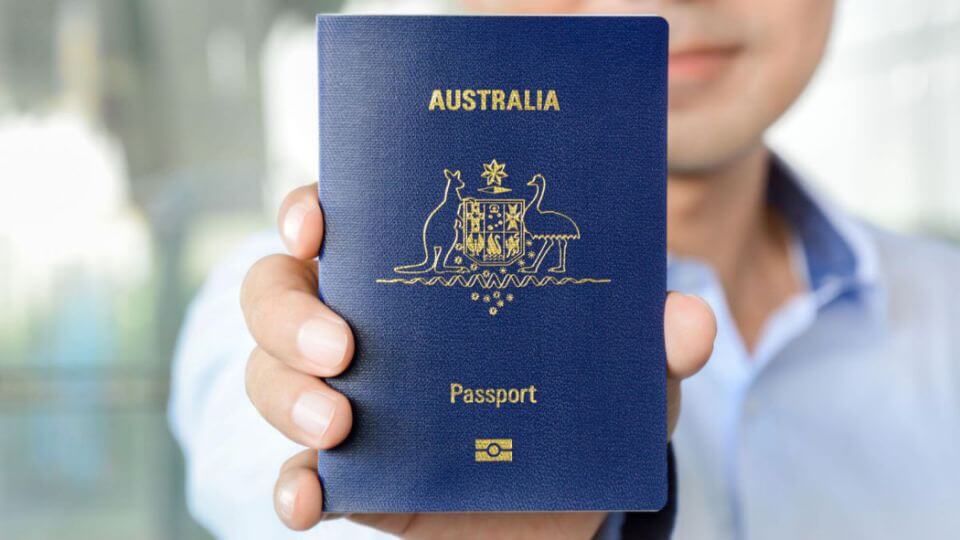
Australia has been ranked one of the best countries to be an immigrant, a new global study has found. Photo: Getty Images.
The US fell in the rankings due to its perceived economic inequality, according to the data publisher.
More than 21,000 people worldwide participated in the Best Countries survey, in which they assessed how closely they associated 80 countries with specific characteristics.
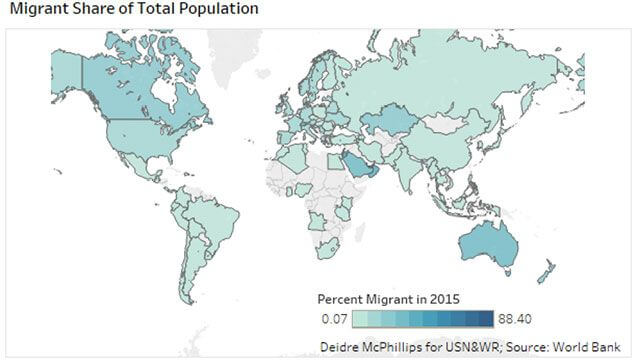
Four of these – "economically stable," "good job market," "income equality" and "is a place I would live" – were included in the ranking.
Data on migrant populations from the World Bank and the United Nations was also used to determine the outcome of the rankings.

The US fell in the rankings due to its perceived economic inequality. Picture: AP
"While our methodology did not focus on refugees specifically, it did take into account immigration policies and integration measures per analysis from the United Nations," Deidre McPhillips, a data reporter who helped design the rankings, told the Washington Post.
"Our aim with this package was to focus on the economic aspects of immigration and the impacts this could have on a country's perceived standing in the world."
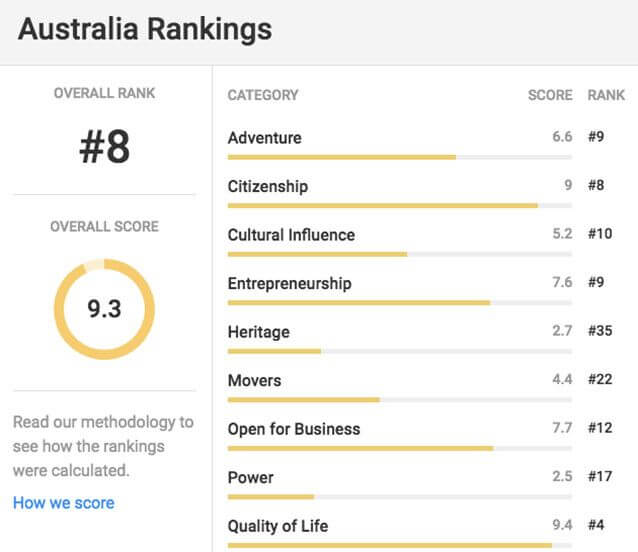
Australia ranked eighth best country overall in the US News report. Picture: US News and World Report
European and North American nations ranked highest, however, Serbia came in far lower at 68, while the Czech Republic ranked 50.
Kenya ranked lowest, closely preceded by Guatemala and Tunisia.
Australia ranked eighth overall in the US News Best Countries poll, which also considers the quality of life, entrepreneurship, cultural influence and adventure.
The new occupation lists have been released for the 2017-18 immigration intake program
Australia has announced the new skilled occupation list for the immigration intake program for the year 2017-18. The new occupation list takes effect on Saturday, 1st July 2017.
Applicants for General Skilled Migration are required to nominate an eligible occupation from the Medium and Long-term Strategic Skills List (MLTSSL) or the Short-term Skilled Occupation List (STSOL).
Applicants for the following visas can nominate an occupation from the MLTSL
Subclass 189 (Skilled—Independent) visas; and
Subclass 489 (Skilled—Regional (Provisional)) visas by applicants who are not nominated by a State or Territory government agency; and
Subclass 485 (Temporary Graduate) visas.
The new MLTSSL has 178 occupations that can be nominated for skilled migration to Australia.
Each year, the Department of Education and Training advises the Minister for Immigration and Border Protection on composition of the skilled occupation list.
The suitability of occupations for inclusion on the SOL is assessed through a two-step process. The first step involves identifying occupations that are most susceptible to supply constraints and are likely to warrant government intervention to address these constraints.
The second step involves assessing the medium to long-term skill needs of the economy for each occupation identified in step one, to determine if the occupation would benefit from skilled migration.
12 occupations have been entirely removed from the list of eligible skilled occupations.
| Occupation | ANZSCO code |
|---|---|
| Equipment Hire Manager^ | 149915 |
| Fleet Manager^ | 149411 |
| Picture Framer^ | 394212 |
| Property Manager^ | 612112 |
| Psychotherapist^ | 272314 |
| Real Estate Agent Principal^ | 612113 |
| Real Estate Agent^ | 612114 |
| Real Estate Agent Representative^ | 612115 |
| Ship’s Engineer | 231212 |
| Ship’s Master | 231213 |
| Ship’s Officer | 231214 |
| University Tutor^ | 24211 |
A number of occupations have been added to the lists for certain visa programmes and some additional occupations have moved between the STSOL to the MLTSSL.
The Short-term Skilled Occupation List (STSOL) replaced the Consolidated Skilled Occupation List in April this year.
Those applying for Skilled Nominated Subclass 190 visa, Skilled Regional Provisional Subclass 489 visa (state nominated), Employer Nomination Scheme Subclass 186 visa, Temporary worker (Skilled) Subclass 457 visa and Training Subclass 407 visa- Occupational Training Stream must nominate an occupation on the STSOL.
It must be noted that on the Subclass 190 and Subclass 489 your occupation needs to be on a nominating State’s list as well as being on the MLTSSL or STSOL.
Firers and hirers: Australia's fastest growing jobs
Australia is shedding jobs for retailers and farmers by the tens of thousands as we become a country of carers and builders.
That's the verdict from the Australian Bureau of Statistics which released its detailed labour force data on Thursday.

There are now 60,000 fewer jobs in Australia's farms, forests and fisheries than there were a decade ago, with 30,000 lost in the past year alone.
Photo: Glenn Hunt
Accommodation and hospitality have bolted to become among the country's fastest-growing job creators, adding more than 40,000 jobs each over the year to May.
But they are also driven by the nation's cheapest hires, perpetuating Australia's torpid low wage growth as higher-paid jobs in finance and utilities are cut.
"The quarterly data shows that the economy is creating mostly jobs that are below average in terms of earnings," said Citibank economist Jane Clapcott.
"The only exception to this is the jobs being created in the professional services sector, but these are geographically concentrated in NSW."

Accommodation and hospitality have bolted to become among the country's fastest growing job creators, adding more than 40,000 jobs each over the year to May.
Photo: Tamara Voninski
Those professional services, including lawyers and accountants had the strongest surge of all the sectors, adding 62,000 jobs in the past year.
The manufacturing sector also made a comeback, contributing an extra 14,000 jobs, while the other historical foundation of the Australian economy, mining, put an extra 3000 people to work over the past year, mostly in WA.

There are now 366,000 more jobs in the healthcare sector compared to 2010. Photo: Nic Walker
"Manufacturing is growing again because of a strong rise in demand for food and beverages and higher state government infrastructure spending," said Commonwealth Bank economist Michael Workman.
"So while the car industry is being wound down, there are other manufacturing groups that will replace those relatively highly paid jobs."
He said demand was not only being driven by locals, with a strong push for Australian services from foreigners in the tourism and education sectors.
Jobs added or lost since May 2016

Source: ABS Labour Force, Detailed, Quarterly Get the data
Meanwhile, opportunities for work in agriculture has taken a battering. There are now 60,000 fewer jobs in Australia's farms, forests and fisheries than there were a decade ago, with 30,000 lost in the past year alone.
Retail, once Australia's largest employing industry, has also shed 20,000 jobs over the past 12 months but still employs 1.2 million people.
The country's shops narrowly avoided a worse result after the sector gained 13,000 workers in the three months to May.
The residential boom in NSW and Victoria has created more than 100,000 jobs in construction since 2010, around 22,000 in the last year alone.
But healthcare has been the real driver. There are now 366,000 more jobs in the healthcare sector compared to 2010. At 1.6 million employees it now makes up 14 per cent of the workforce.
It is a run that is unlikely to stop. The rollout of the National Disability Insurance Scheme could see the total rise to 16 per cent, according to analysts.
That is 243,000 extra healthcare jobs in the next few years.
"Overall, job gains in the past three months were significant – the largest quarterly gain for over two years. In fact it was the second biggest quarter of job creation in 12 years," said Commsec economist Craig James.
"Clearly the latest data serves as yet a further wake-up call to analysts and investors who somehow believe that the job market and broader economy are struggling."
Unemployment falls to 5.5 per cent in May
The number of hours worked by Australians has surged by the highest rate in a decade after the unemployment rate fell to its lowest level in four years on Thursday.
TD Securities Economist Prashant Newnaha said the result "surpassed street expectations by a country mile".
More than 52,000 people found full-time jobs in May while 10,100 part-time ones fell away, according to figures released by the Australian Bureau of Statistics.
The result defied the predictions of economists, who had pencilled in a boost of just 10,000 new jobs. Australia is now within half a per cent of the floor of the so-called "natural rate of unemployment", according to a bulletin released by the Reserve Bank on Thursday.
Economists are usually sceptical of single-month results, but the release of the latest figures has put the rebound in the labour market beyond doubt.
Capital economist Kate Hickie said the 42,000 rise in employment in May marked the third month of "an exceptionally strong rate" of job creation.
The news was welcomed by Treasurer Scott Morrison and Labor's employment spokesman, Brendan O'Connor.

The news was welcomed by Treasurer Scott Morrison. Photo: Andrew Meares
"When Australian businesses are providing jobs they are showing confidence in the economy," Mr Morrison said in Parliament on Thursday.
The number of hours worked by Australians jumped by 31.1 million hours in May, the biggest monthly surge in 11 years.

Opposition spokesman for employment, Brendan O'Connor, said the figures did not show the full story of the labour market.
Photo: Alex Ellinghausen
The most accurate measure of the labour market, the employment to working age population ratio, increased over the year to May by 0.2 percentage points to 61.3 per cent.
Mr O'Connor said the figures did not tell the full story of the labour market.

The participation rate edged up, to 64.9 per cent, from 64.8 per cent in April. Photo: Erin Jonasson
"Despite the rise in hours worked this month, hours worked per capita is at levels not seen since the mid-1990s, which emphasises the growth in part-time employment," he said.
"Underemployment remains at record highs, with more than 1.1 million Australians wanting more work but not being able to find it."
The underemployment rate for the three months to May decreased by 0.1 percentage points to 8.8 per cent.
'Welcome result'
ANZ economist David Gladwell said the increase in hours, which is another measure of the number of jobs added to the economy, could eventually bring some relief to those struggling through historically low wage growth.
"This will be a welcome result for households, with the absorption of spare labour capacity a prerequisite for any improvement in wages growth," he said.
Ms Hickie was more sceptical.
"There still appears to be plenty of spare capacity in the labour market, which will keep wage growth weak and mean that the Reserve Bank probably won't raise rates until 2019," she said.
The economy is adjusting to the end of a resource boom and the central bank has cut its benchmark rate to a record-low 1.5 per cent in order to encourage firms to borrow and hire.
NSW boost
NSW is largely responsible for fuelling the end of that transition, Thursday's figures showed, contributing 30,000 new positions in May. The Bureau said that can also be partly attributed to their methodology of rotating the survey.
Employment to population ratio

Source: Australian Bureau of Statistics, Labour Force, May 2017
The figures, which beat expectations of a flat rate of 5.7 per cent, buoyed the Australian dollar, which jumped more than a third of a cent to US76.27¢, nudging a two-month high.
Rate cut 'off the table'
CommSec chief economist Craig James said the Reserve Bank wouldn't be in a rush to lift rates, but rate cuts "could now be taken off the table".
"It's hard to see the doomsayers finding too many negatives in the latest jobs report. Even the underutilisation rate fell sharply in the latest quarter," Mr James said.
"More jobs and more hours worked means more spending and more momentum for the economy. This is a result to be celebrated by consumers and businesses alike."
Global university rankings: one Australian university makes the top 20
One Australian university is among the world's top 20 universities and five are in the top 50, according to a major global ranking that shows Australian universities have made overall improvements in all measures, including teaching, employability and research.
The University of Sydney was the only Australian university to drop down the list, slipping four places from 46, while six of Australia's top universities improved in their rank from last year.

Seven Australian universities are in the top 100 in a major global ranking this year. Photo: Louise Kennerley
Australian National University is the highest ranked in the country at 20th place in the 2018 QS World University Rankings.
It is followed by the University of Melbourne, ranked at 41, the University of New South Wales at 45, the University of Queensland at 47 and the University of Sydney at 50.
Monash University, with a rank of 60, and the University of Western Australia at 93 round out the seven Australian universities in the top 100.
Belinda Robinson, chief executive of peak sector body Universities Australia, said the ranking is especially important to international students choosing a university.
"Global rankings are a major factor for many international students in deciding where to study, so they're also very important to the $22.4 billion a year that international students bring into Australia's economy," Ms Robinson said.
"These impressive rises underscore the global competitiveness of Australia's universities and the excellent quality of our education and research on the world stage."

QS World University Rankings 2018: Australia's Top 10. Photo: topuniversities.com
Massachusetts Institute of Technology (MIT) is the top ranked university in the world for the sixth consecutive year, followed by Stanford University, Harvard University, the California Institute of Technology, the University of Cambridge, the University of Oxford, University College London, Imperial College London, the University of Chicago and the Swiss Federal Institute of Technology.
MIT has been described as "the nucleus of an unrivalled innovation ecosystem" by QS Quacquarelli Symonds, the education analysis firm behind the ranking, which notes that companies created by the university's alumni have a combined revenue of $2 trillion, the equivalent of the world's 11th largest economy.
Despite the ongoing dominance of US and UK universities in the top 10, QS Quacquarelli Symonds also notes that many other universities from those countries are now being outperformed by "the best of Australia, Russia, China, Singapore and India – among others".

QS World University Rankings 2018: The Top 10. Photo: topuniversities.com
Research director at QS Quacquarelli Symonds, Ben Sowter, said the improved ranking of Australian universities can be partially attributed to the changing political climate in countries such as the US and UK increasing Australia's comparative popularity.
"Higher internationalisation scores certainly reflect coherent international outreach efforts made by university marketing departments," Mr Sowter said. "However, they also reflect the increased desirability of Australian higher education in the light of current political situations in the United States and United Kingdom – typically Australia's main Anglosphere competitors.
"Improvements in scores for Academic Reputation can be attributed to both the type of teaching innovations ... and the standard of research emanating from Australia's universities."
A total of 37 Australian universities are included in this year's ranking, which covers 959 universities around the world and measures performance in research, teaching, employability and internationalisation.
An institution's rank is determined by its academic and employer reputations, student-to-faculty ratio, citations per faculty, and international faculty and student ratios.
Changes to Australian Citizenship processes and requirements
By
Mosiqi Acharya
Australian government on Thursday announced that they were bringing in reforms to strengthen Australian citizenship by putting Australian values at the heart of citizenship processes and requirements.
In a press release, the Minister of Immigration and Border Protection, Peter Dutton said, “Our reforms will ensure applicants are competent in English, have been a permanent resident for at least four years and commit to embracing Australian values.”
He stated that membership of the Australian family was a privilege and should be granted to only those who supported the Australian values, respected laws and wanted to work hard by integrating and contributing to an even better Australia.
“Citizenship is at the heart of our national identity. It is the foundation of our democracy. We must ensure that our citizenship program is conducted in our national interest,” he said.
Here are the 6 new requirements to acquire Australian citizenship:
- All applicants are required to pass a stand-alone English test, involving reading, writing, listening and speaking;
- Applicants are required to have lived in Australia as a permanent resident for at least four years (instead of one year at present);
- Citizenship test will be strengthened with new and more meaningful questions that assess an applicant's understanding of - and commitment to - shared values and responsibilities;
- Applicants will be required to show the steps they have taken to integrate into and contribute to the Australian community. Examples would include evidence of employment, membership of community organisations and school enrolment for all eligible children.
- An applicant can fail the citizenship test only three (at present there is no limit to the number of times an applicant can fail the test);
- An automatic fail for applicants will be introduced who cheat during the citizenship test. The statement says, “English language proficiency is essential for economic participation.
“It promotes integration into the Australian community and social cohesion. Relevant exemptions will apply, such as for permanent or enduring incapacity and for those under 16 years of age.”
The new reforms will also consider criminal record including violence against women and children, of an applicant.
“Any conduct that is inconsistent with Australian values will be considered as part of this process. For example, criminal activity, including violence against women and children, involvement in gangs or organised crime, is thoroughly inconsistent with Australian values.
“These changes have been informed by the feedback received from the National Consultation on Citizenship, conducted by Senator the Hon Concetta Fierravanti-Wells and the Hon Philip Ruddock MP in 2015 and the 2016 Productivity Commission Report Migrant Intake into Australia.”
The Government will introduce new citizenship related legislation, informed by responses to this paper, into the Parliament by the end of 2017.
The package of reforms will apply to applications received on or after the Government’s announcement on 20 April 2017.
Meanwhile, if you have suggestions on changes to values and other citizenship test questions, you have until 1st June 2017 to provide your views.
Contact
Office Johannesburg: +27 11 783 9440
Mobile - Tracey: +27 82 419 3696
Email: visas@australianmigration.co.za
Apply Now
So that we may assess your eligibility for a Business Innovation and Investment Visa, please complete the following Assessment Form.
So that we may assess your eligibility for a General Skilled Migration, please complete the following Assessment Form.


Speak to our Consultants
 Michelle Oztas: +27 11 783 9440
 Tracey Lawrence: +27 82 419 3696
Registered Migration Agent No. 9803463
Contact Details
Tel: +27 11 783 9440
Australian Mobile: +61 404 371 683
The Business Exchange
4th Floor, 96 Rivonia Road
Sandton
South Africa,
2057